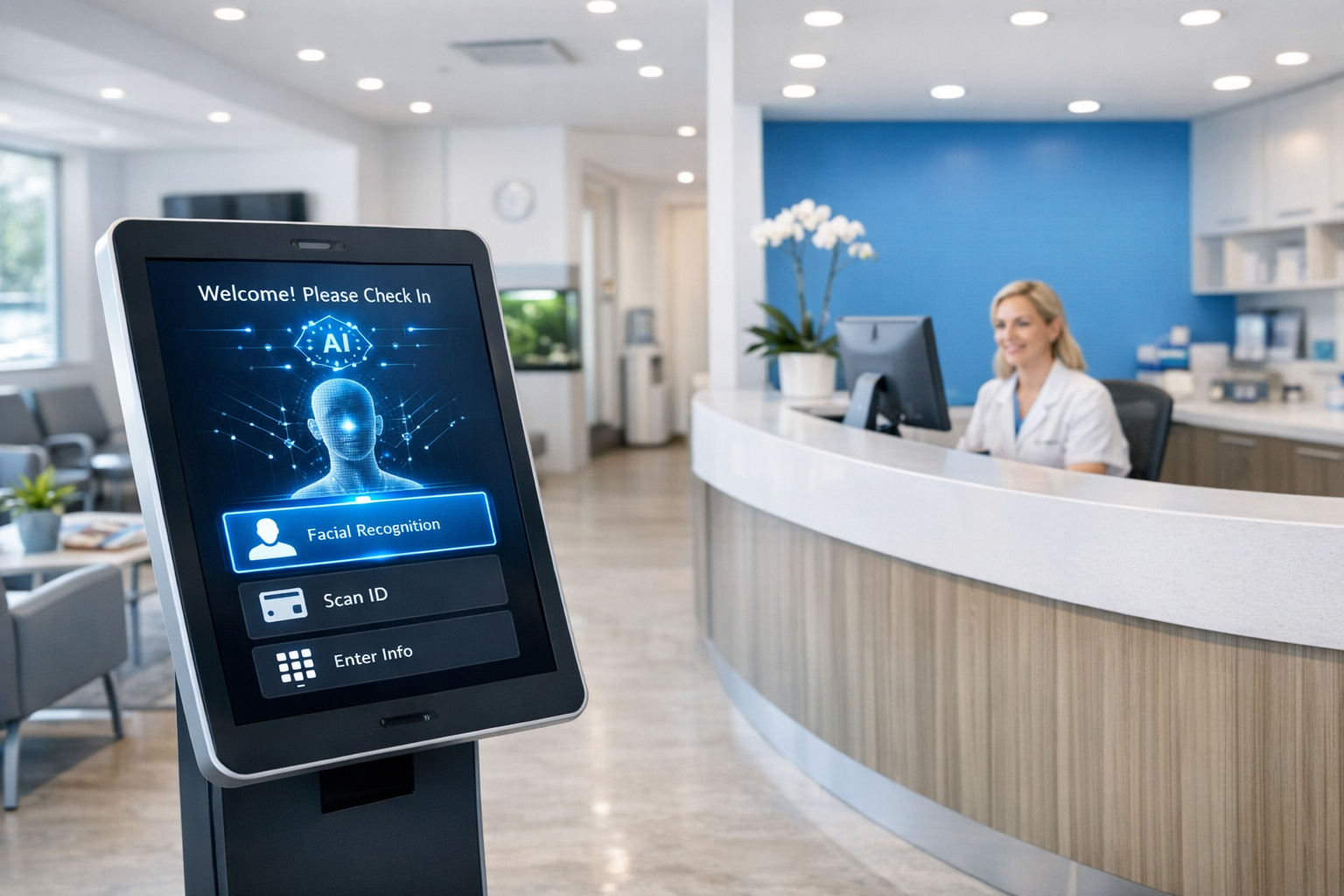
The Front Desk Bottleneck
A typical dental office with two dentists and four hygienists handles 40-60 patient interactions per day. Each one involves scheduling, insurance verification, appointment reminders, treatment plan follow-ups, and billing. That's not a front desk job — that's an air traffic control operation.
The math is brutal. Two front desk staff at $40,000 each spend roughly 60% of their time on tasks that follow the exact same pattern every single time. Confirmation calls. Insurance pre-checks. Payment reminders. Recall notices. That's $48,000 per year in salary spent on repetitive work that AI handles faster and more consistently.
I'm not suggesting you fire your front desk. I'm suggesting you free them up to do the work that actually requires a human: calming nervous patients, handling complex insurance disputes, and building the relationships that keep patients coming back for 20 years.
AI-Powered Patient Scheduling
Dental scheduling is uniquely complex. You're not just booking time slots — you're matching procedure types to provider availability, accounting for room and equipment requirements, and managing hygiene vs. restorative vs. emergency slots.
AI scheduling systems handle this complexity without breaking a sweat. A patient calls or goes online to book. The system knows Dr. Martinez does crowns on Tuesdays and Thursdays, the Cerec machine is in Room 3, and there's a 90-minute block needed. It finds the optimal slot, confirms it, and adds it to the practice management system — all without your front desk touching the phone.
Reducing No-Shows with Smart Reminders
No-shows cost the average dental practice $150-200 per missed appointment. For a busy practice, that's $3,000-5,000 per month in lost revenue.
AI reminder systems go beyond a simple "you have an appointment tomorrow" text. They send a sequence: 1 week out (email with pre-visit forms), 48 hours out (text confirmation with one-tap reschedule option), and 2 hours before (final reminder with directions). If a patient doesn't confirm, the system automatically reaches out to the waitlist to fill the slot.
Practices using AI-driven reminders consistently report no-show rates dropping from 12-15% to 3-5%. For a practice with $1.5M in annual revenue, that's $100,000-150,000 in recovered production.
Insurance Verification Automation
This is the single biggest time sink in most dental offices. Your staff spends 10-15 minutes per patient calling insurance companies, waiting on hold, verifying benefits, and documenting coverage details. Multiply that by 30 patients per day and you've got one full-time employee doing nothing but insurance verification.
AI-powered verification systems connect directly to insurance portals and pull benefits in real time. Patient is scheduled for a crown? The system automatically checks their plan's coverage for D2740, verifies remaining annual maximum, confirms the deductible status, and flags any pre-authorization requirements — all before the patient walks in the door.
The time savings are dramatic: from 10-15 minutes per patient to under 1 minute. But the real win is accuracy. Manual verification has an error rate of 8-12%. AI verification drops that below 2%. Fewer claim denials means faster payment and less rework for your billing team.
Automated Billing and Claims Processing
Dental billing is where good practices leak money. Procedure codes get entered wrong. Claims go out late. Denied claims sit in a pile. Patient balances don't get followed up. Every billing mistake costs you time and cash flow.
AI billing systems attack this from multiple angles:
- Auto-coding: Treatment notes get mapped to correct CDT codes automatically, with AI flagging potential mismatches before the claim goes out
- Claim scrubbing: Every claim is checked against payer-specific rules before submission, catching errors that cause denials
- Denial management: Denied claims get automatically categorized, and common denials (missing X-rays, narrative requirements) get resubmitted with the correct attachments
- Patient billing: Statements go out automatically with clear breakdowns, and payment reminders escalate on a schedule you set
One practice I consulted with had $180,000 in outstanding patient balances. After implementing automated billing follow-up, they collected $120,000 of that within 90 days — money that was just sitting there because nobody had time to make the calls.
Patient Communication and Recall
Your hygiene recall system is your recurring revenue engine. But most practices manage it with a list that someone checks when they have time — which means they rarely have time.
AI recall systems track every patient's recommended return schedule, send personalized outreach based on their preferred communication channel (text, email, or phone), and escalate through a sequence until they book or explicitly decline. For patients overdue by 6+ months, the system can send targeted messages about specific concerns ("It's been 8 months since your last cleaning — did you know that gum disease risk increases significantly after 6 months?").
This isn't spam. It's personalized, clinically relevant communication that patients actually respond to. Practices using AI-driven recall see reactivation rates of 15-25% for patients who've been inactive for 12+ months.
Treatment Plan Follow-Up
Here's a number that should bother every practice owner: the average dental practice has $500,000-1,000,000 in unscheduled treatment plans sitting in their practice management system. That's treatment that patients agreed they needed but never scheduled.
AI follow-up systems track every presented treatment plan and automatically reach out to patients who haven't scheduled. The messaging is intelligent — not "you need a crown," but "Dr. Martinez mentioned a crown on tooth #14 during your last visit. Insurance shows you have $1,200 remaining in your annual maximum, which resets on January 1. Would you like to use that benefit before it expires?"
That kind of specific, financially relevant messaging converts at 3-4x the rate of generic follow-up calls. One practice converted $85,000 in unscheduled treatment within the first quarter of using AI follow-up.
Online Reviews and Reputation
New patient acquisition in dental is heavily review-driven. The practice with 300+ Google reviews at 4.8 stars dominates local search. But asking for reviews systematically — and responding to every one — requires discipline that busy offices can't maintain.
AI review management works the same way it does for HVAC companies and other service businesses. Post-appointment satisfaction check → happy patients get a review link → concerns get flagged for immediate attention → all reviews get personalized responses. The system learns which patients are most likely to leave reviews and prioritizes outreach to them.
The ROI Math for a Typical Dental Practice
| Area | Annual Impact |
|---|---|
| Reduced no-shows (10% → 3%) | +$105,000 |
| Admin time savings (20 hrs/week) | $24,000 |
| Unscheduled treatment conversion | +$85,000 |
| Faster collections | +$40,000 |
| Patient reactivation | +$30,000 |
| Total annual impact | $284,000 |
Against a typical AI implementation cost of $5,000-8,000 plus ongoing managed service fees, the payback period is measured in weeks, not years.
Getting Started: The Right Sequence
Don't try to automate everything at once. Here's the implementation sequence that delivers the fastest ROI for dental practices:
- Week 1-2: Automated appointment reminders and confirmations (immediate no-show reduction)
- Week 3-4: Insurance verification automation (biggest time savings for staff)
- Month 2: Billing automation and patient balance follow-up (cash flow improvement)
- Month 3: Recall system, treatment plan follow-up, and review management
The key decision is whether to buy off-the-shelf tools or build custom solutions. Generic dental SaaS tools are quick to deploy but lock you into monthly subscriptions that compound over time. Practical AI implementation takes more effort upfront, but your team learns how to use the workflow and improve it over time.
Not sure which approach fits your practice? Start with a free AI readiness assessment. We'll identify your top automation opportunities and estimate the ROI for each one.